
Creatine 101: What it is, benefits and how to take it
Creatine is a compound your body makes and stores mostly in your muscles. You also get small amounts from meat and fish.
What is creatine?
When you lift a weight or sprint, your muscles use ATP for energy. Stored phosphocreatine helps replenish ATP during brief, hard efforts. Creatine is optional and has no stimulant-like kick.
What are the benefits of creatine?
Creatine can support strength training and repeated high-intensity exercise. In a 12-week study of 19 resistance-trained men, bench-press strength rose 24% with creatine and 16% with placebo. The creatine group took 25 g daily for one week, then 5 g daily. Those results reflect that study’s training and dosing protocol. Read the study.
Lean-mass results vary. A trial of 63 adults taking 5 g daily found no extra lean-mass gain beyond training after the wash-in period. Lean mass includes water. These studies investigated the ingredient. Read the trial.
Who can benefit?
Adults who lift weights or play sports with repeated sprints may find creatine useful. You can start training without it. If you’re under 18, pregnant, breastfeeding, taking medication or managing a health condition, ask a clinician before starting.
How do you take creatine?
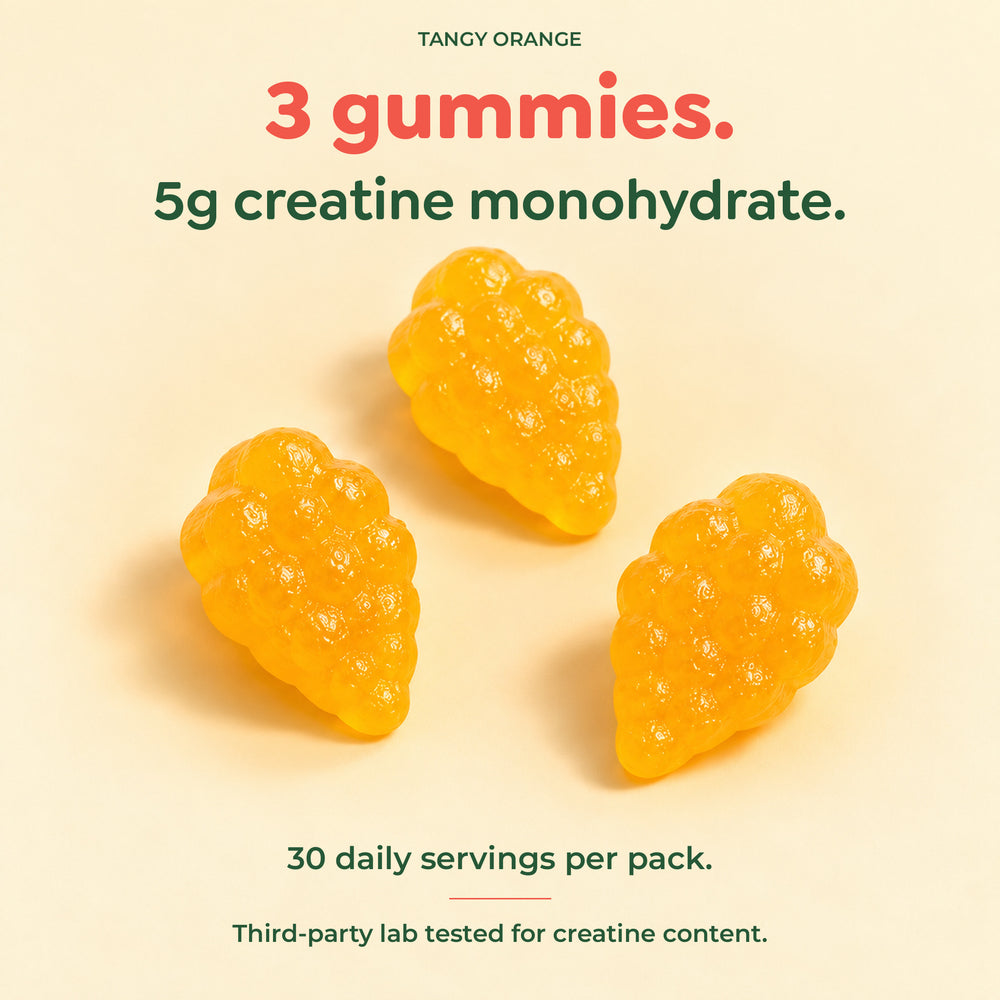
Adult sports research commonly uses 3–5 g a day for maintenance. Drops provides 5 g of creatine monohydrate in three gummies. Follow your flavour’s label. Choose a time you can repeat, including rest days.
Do I need a loading phase?
No. In one protocol, 3 g daily for 28 days increased muscle creatine stores by about 20%. That measurement describes stores and cannot tell you when you will feel a benefit. Hultman et al.
Powder or gummies?
Chew gummies or mix powder into a drink. Both formats can contain creatine monohydrate. Check each label for the form, grams per serving and other ingredients.